Table of Contents
Best Reef-Safe Sunscreen for Beach Travel: 5 TSA-Approved Lotions for Carry-On Travelers
I love soaking up the sun on vacation. There’s something about feeling the warmth on my skin after months of cold weather that makes travel feel real. Finding the best reef-safe sunscreen for Beach Travel is essential.
However, there’s nothing worse than waking up on day two of a beach trip lobster-red. When you’re burnt, you can’t enjoy the water because every movement stings. That’s why choosing the right sunscreen matters.
Choosing reef-safe sunscreen for beach travel means navigating both TSA sunscreen rules and environmental regulations. Additionally, I’ve tested 15+ brands across Florida beaches. I’m also preparing for Hawaii and Caribbean trips where reef-safe isn’t just preferred—it’s required by law.
These 5 lotions consistently perform in tropical heat. Furthermore, they fit in carry-on liquids bags and stay put during beach volleyball games and family paddleball tournaments. Each option below is matched to a specific traveler profile. As a result, you can choose in under 60 seconds and get back to planning your trip.
Transparency in Partnerships: To keep this inspiring content and our travel style tips free for all voyagers like you, some links shared throughout the site are affiliate links. Using these links comes at no extra cost to you, and I can earn a commission. Your support helps me maintain the blog and continue sharing content you enjoy. So voyage on in style.
ThinkSport SPF 50+
Best for sensitive skin
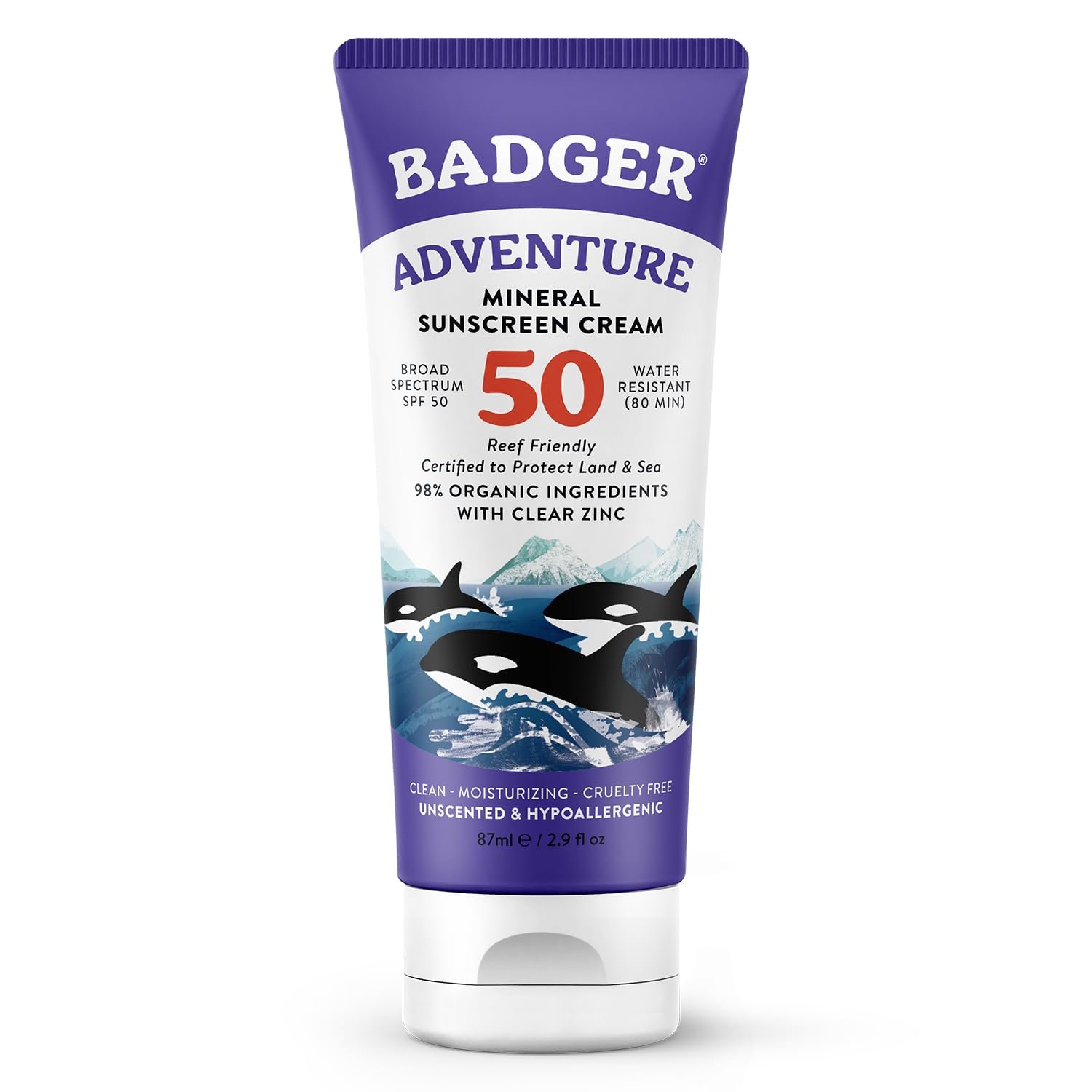
Badger Sport Sunscreen
The Outdoor Specialist
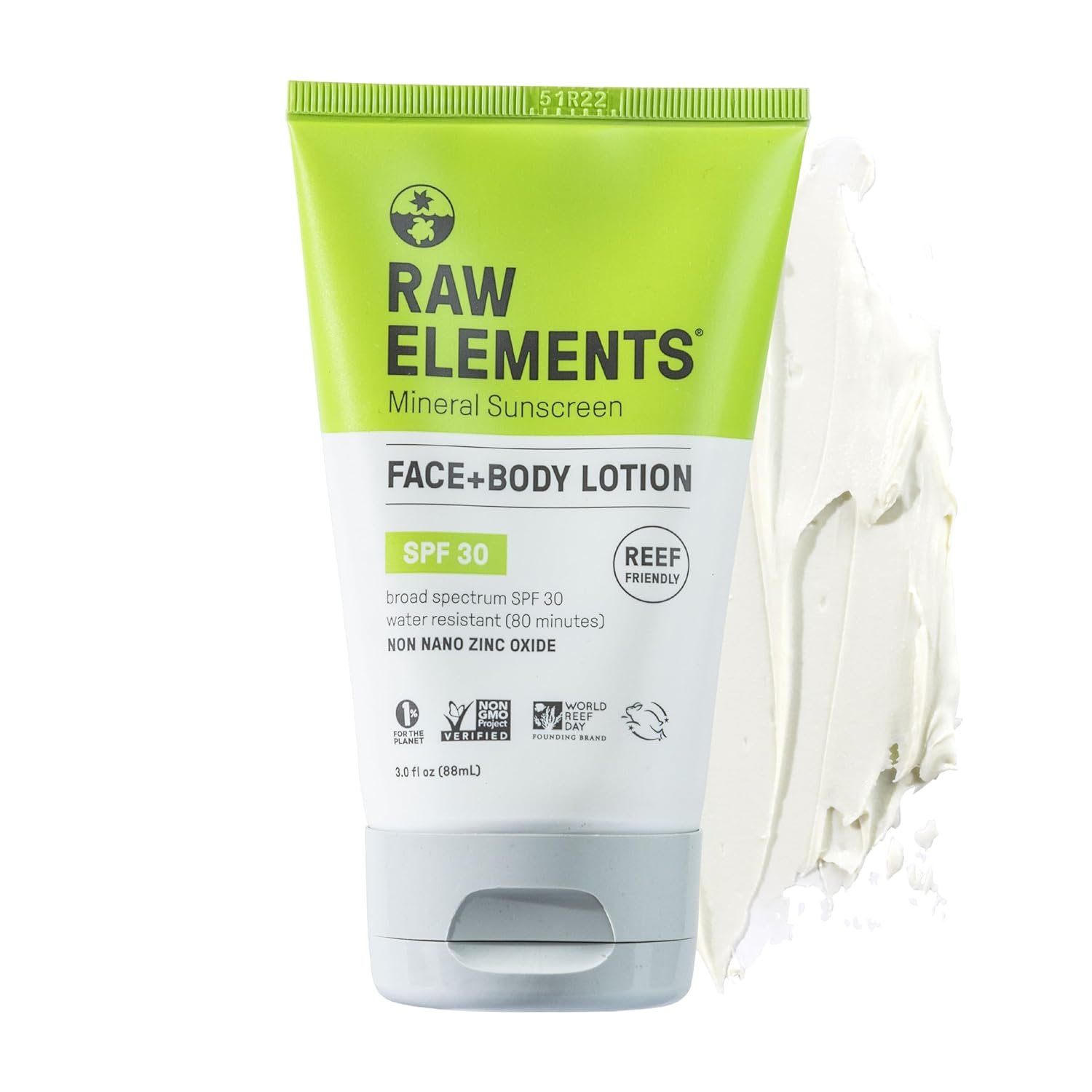
Raw Elements Face + Body
The Premium Pick
Quick Comparison: Best Reef-Safe Sunscreen Options
Product Name | Link | Best For | Price Range | Key Feature |
Raw Elements Face + Body | The Premium Pick | $18-22 | Zinc-based, zero white cast | |
Blue Lizard Sensitive Skin | The Value Winner | $12-16 | 3oz TSA size, dermatologist tested | |
Sun Bum Mineral SPF 50 | The Frequent Flyer | $14-18 | 3oz tube, packs flat | |
Badger Sport Sunscreen | The Outdoor Specialist | $13-17 | Water-resistant 80 min | |
ThinkSport SPF 50+ | The Dark Horse | $15-19 | Unscented, sensitive skin safe |
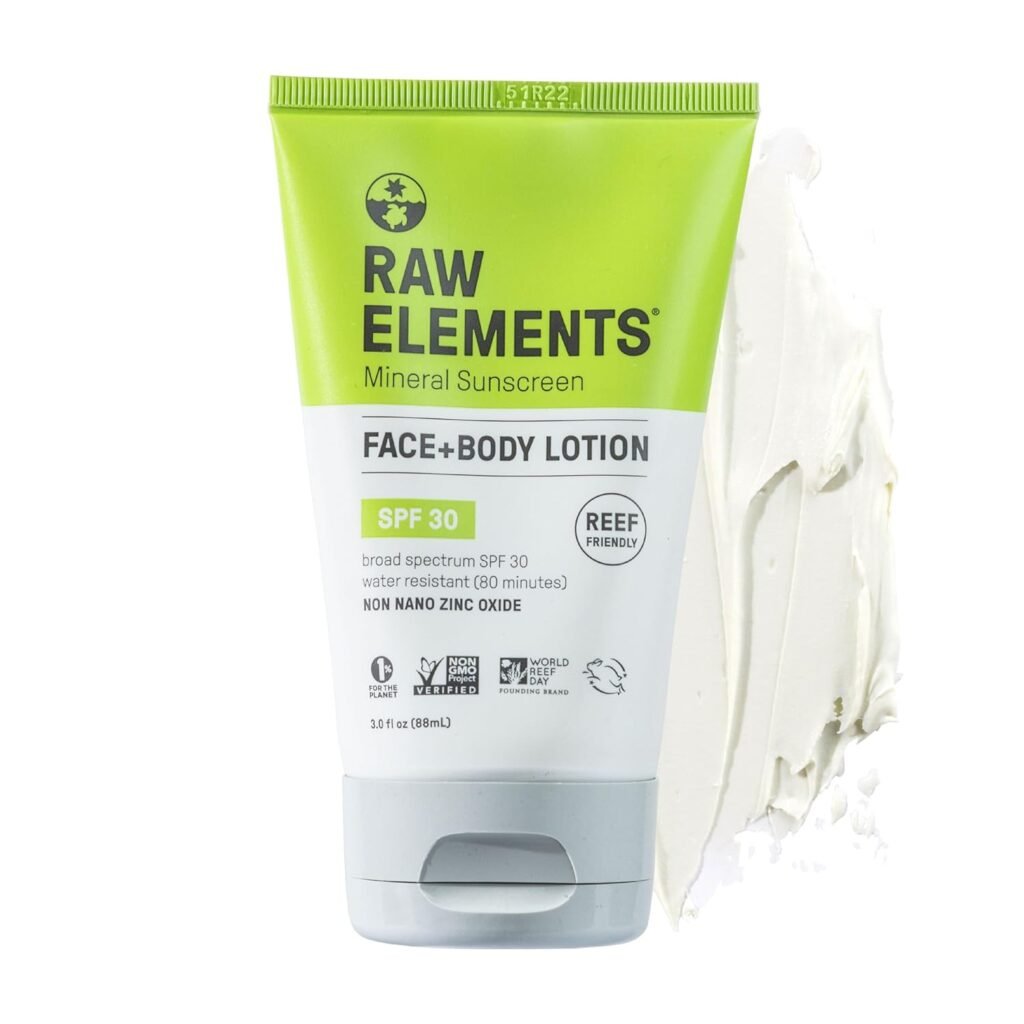
Raw Elements Face + Body: Best Reef-Safe Sunscreen for Beach Travel Without White Cast
I tested this daily during a week in New Smyrna Beach. As a result, I reapplied 4-5 times without the chalky residue some mineral sunscreens leave behind.
The Tested Reality: This zinc-based formula absorbs faster than any mineral sunscreen I’ve used. After 30 seconds of rubbing, it disappears completely.
Moreover, I wore it during an intense beach volleyball tournament where I was diving in the sand every few minutes. It stayed put without running into my eyes when I started sweating.
Additionally, I used it on my face before applying makeup for dinner out. I had zero issues with pilling or white streaks. This is the best mineral sunscreen for travel if you want broad spectrum UVA/UVB protection without the white cast.
What Makes It Work:
- 3oz tin container fits in TSA quart bag with room for face moisturizer, lip balm, and small hair product
Choose this if: You’ve avoided mineral sunscreens because of white cast. However, you need reef-safe protection for Hawaii or Caribbean destinations. Also perfect if you’re active on the beach and need something that won’t slide off.
➡️ Where to find it: Raw Elements Face and Body Mineral Sunscreen SPF 30 Tube
The only downside: depending on which you purchase the tin container can dent if packed carelessly. Therefore, I keep it in my toiletry bag’s zippered pocket to prevent crushing. If you’re building your beach toiletry kit from scratch, my Best Travel Toiletry Containers for Carry-On Trips guide walks through exactly what fits in the TSA quart bag alongside sunscreen.
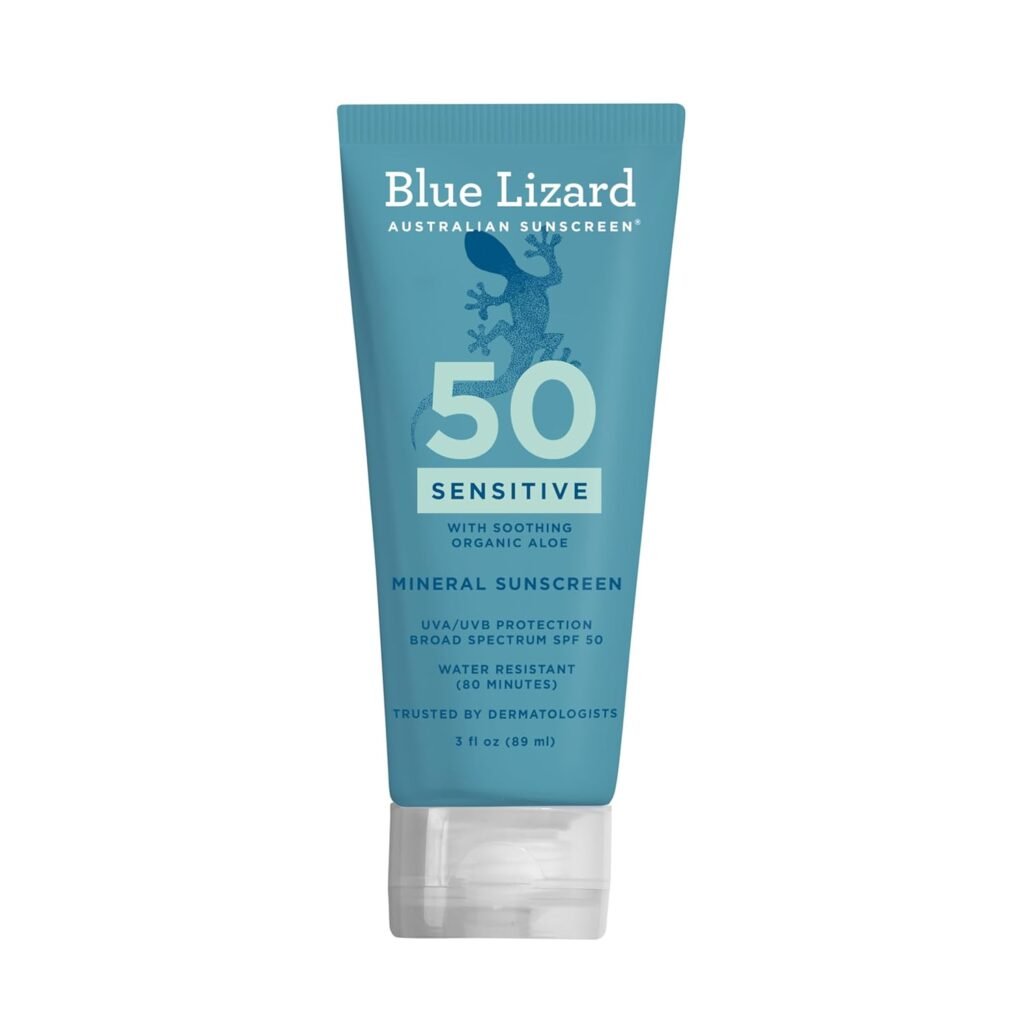
Blue Lizard Sensitive Skin: Best Reef-Safe Sunscreen for Beach Travel on a Budget
This surprised me because it performs nearly identically to brands costing $8-10 more per bottle.
The Tested Reality: I used this on a Florida beach trip where I spent 6+ hours outside daily. It protected through ocean swimming and a heated spikeball match. Furthermore, it didn’t sting my eyes when sweating.
The bottle lasted the full 5-day trip with reapplications every few hours.
I’m someone who burns easily if I’m not careful. Nevertheless, this kept me protected even when I lost track of time during a family paddleball tournament that went longer than expected.
The formula is slightly thicker than Raw Elements. However, it still absorbs well and provides excellent broad spectrum protection.
What Makes It Work:
- 3oz bottle (exactly TSA limit) provides 8-10 full-body applications for average adult
Choose this if: You’re taking 2-3 beach trips per year. Additionally, you want reef-safe protection without spending $20+ per bottle. Perfect if you’re active and need long-lasting coverage without constant reapplication.
➡️ Where to find it: Blue Lizard VIEW ON AMAZON
What I wish was different: The squeeze bottle design makes it hard to get the last 15% of product out. Consequently, I now cut the bottle open at the end to avoid waste.
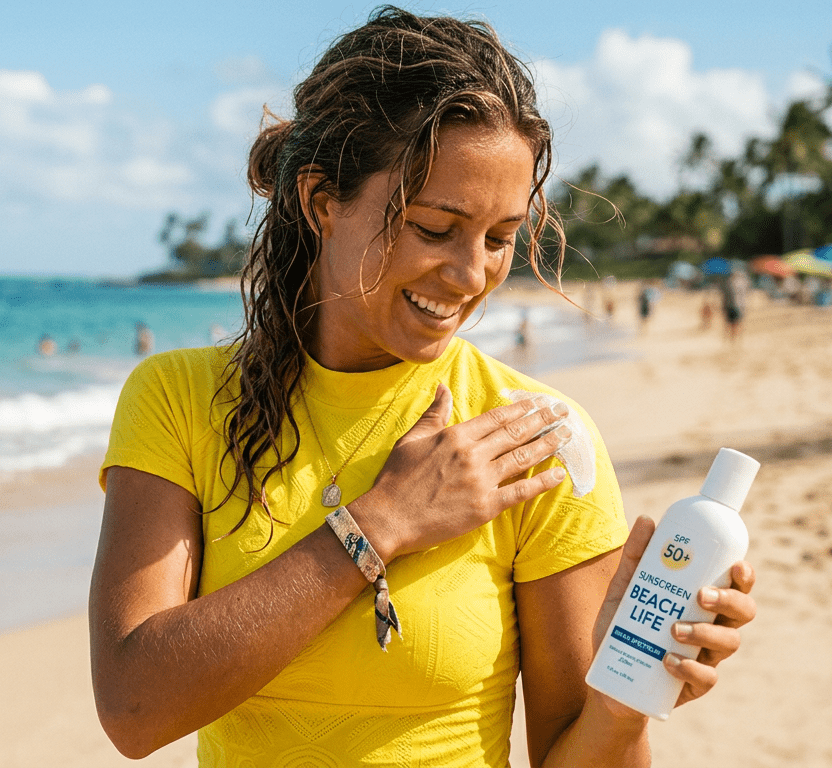
Best Reef-Safe Sunscreen for Beach Travel in 2026
Suit up and SPF up! ☀️ Discover our top 5 reef-safe picks—starting with this skin-loving mineral favorite from Blue Lizard.
Sun Bum Mineral SPF 50: Best Reef-Safe Sunscreen for Frequent Carry-On Travelers
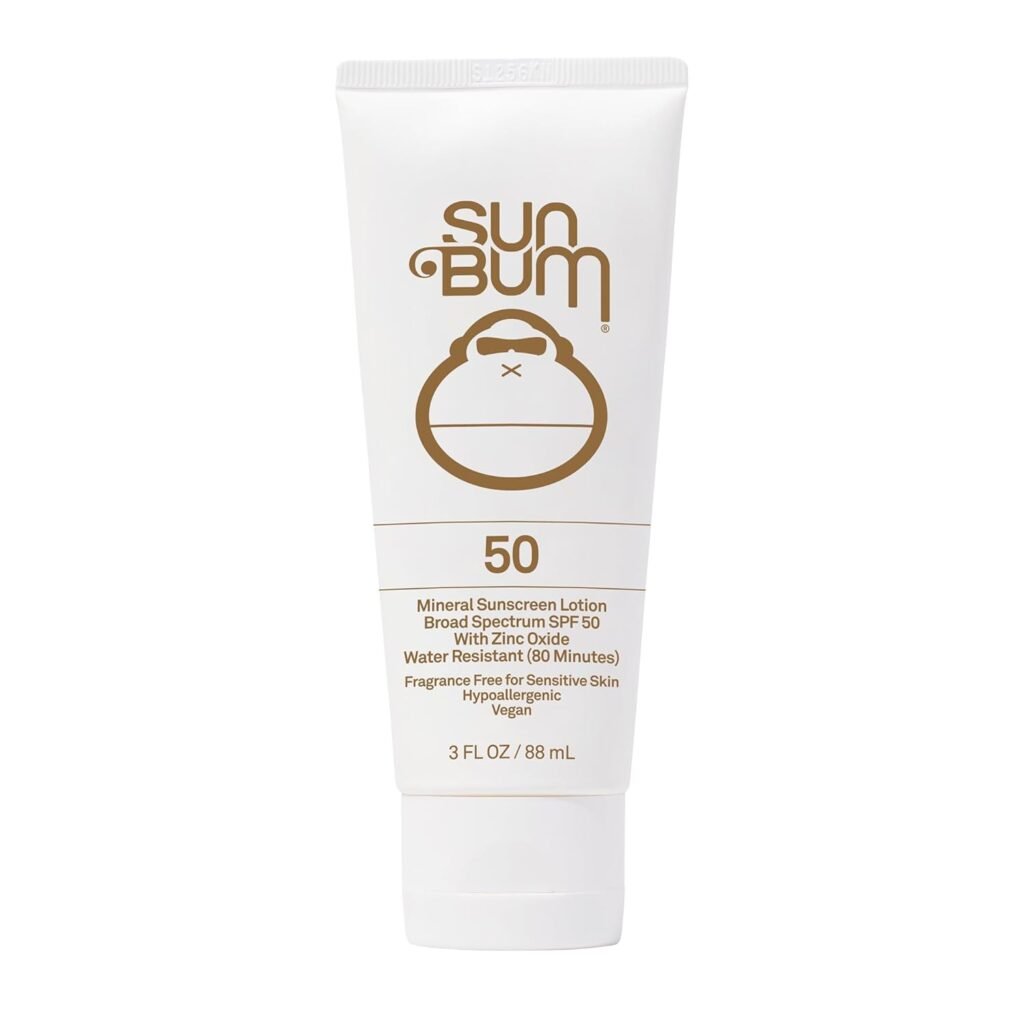
This is what I keep in my LOVEVOOK 40L Backpack because the tube design packs perfectly flat. I chose this backpack specifically for carry-on beach travel, and the flat tube design maximizes the space in my front pocket.
The Tested Reality: I’ve flown with this 8+ times in the past year. The tube design means it fits in any corner of my TSA quart bag. As a result, it doesn’t take up cylinder space like bottles do.
Moreover, it’s the easiest to apply quickly—I can cover my arms and face in under 60 seconds before heading to the beach.
When I’m eager to get out and soak up the sun, I don’t want to waste ten minutes rubbing in sunscreen. This applies fast. Therefore, I’m not losing precious vacation time standing around the hotel room.
This chemical-free sunscreen offers complete UVA/UVB protection without the hassle.
What Makes It Work:
- Flexible tube compresses as you use it, saving space in carry-on throughout your trip
Choose this if: You travel carry-on only and need carry-on approved sunscreen that won’t waste precious liquids bag real estate. Also great if you value quick application so you can maximize your time in the sun.
➡️ Where to find it: Sun Bum Mineral SPF 50 FIND IT ON AMAZON
The coconut scent is light and pleasant. However, if you’re scent-sensitive, this might not be your pick. Fortunately, it fades within 10 minutes of application.
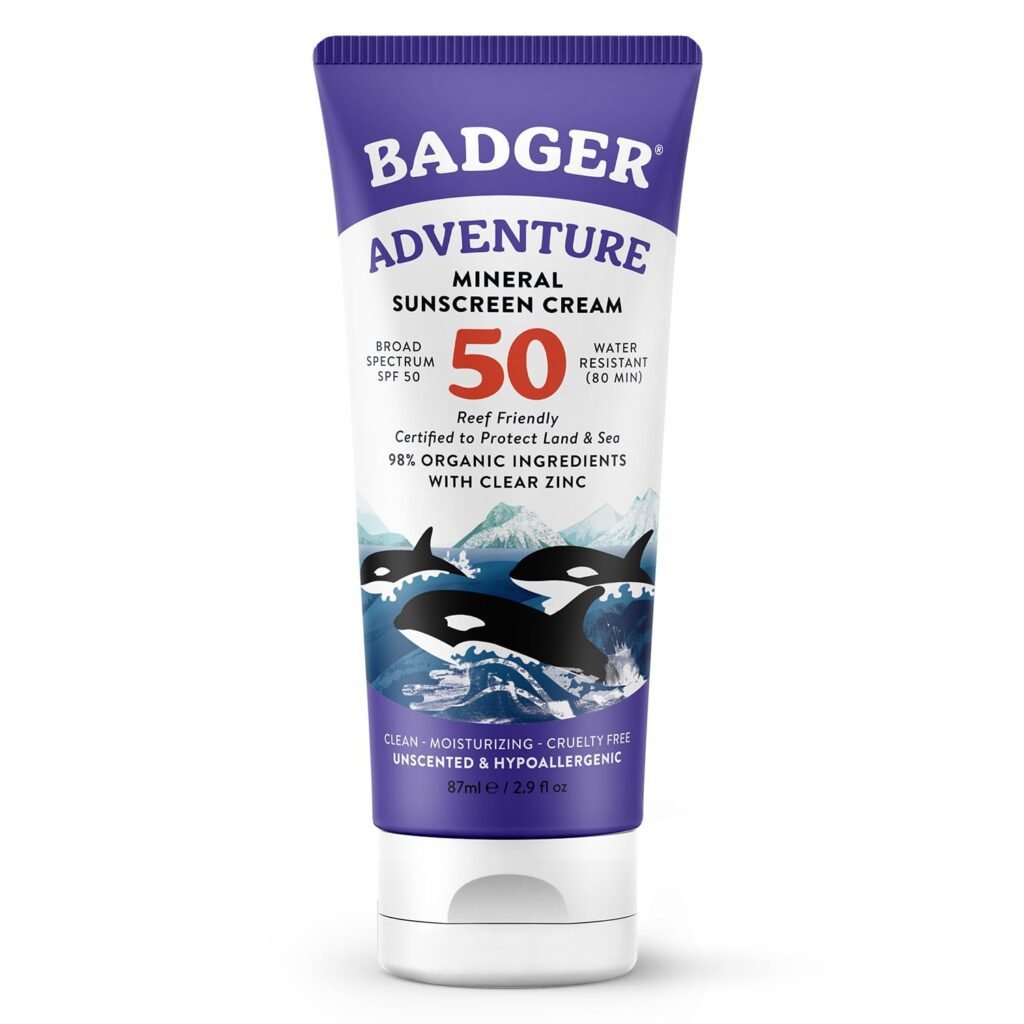
Badger Sport Sunscreen: Best Reef-Safe Sunscreen for Active Beach Days
This stays put better than any other reef-safe option I’ve tested during high-movement activities.
The Tested Reality: I wore this while kayaking in Florida. It didn’t slide off despite sweating and water splashing. After 90 minutes on the water, I checked my shoulders—still protected, no redness.
This is my go-to when I know I’m going to be really active. Whether you’re following my Carry-On Packing List for a 5-Day Trip or heading out for a long weekend, having water-resistant sunscreen means you can pack lighter and skip the beach bag
Furthermore, most mineral sunscreens need reapplication after 40 minutes of swimming. In contrast, this genuinely lasts 80 minutes as claimed. That matters when you’re in the middle of a tournament and don’t want to pause to reapply.
This is also my top pick as the best sunscreen for snorkeling since it stays put underwater.
What Makes It Work:
- NSF certified to remain effective through 80 minutes of water exposure (tested by independent lab)
Choose this if: Your beach days involve snorkeling, paddleboarding, or any activity where you’re in and out of water frequently. Perfect for competitive beach games where you can’t afford to burn between matches.
➡️ Where to find it: Badger Sport Sunscreen & SEE CUSTOMER REVIEWS ON AMAZON
Room for Improvement: this formula takes 45 seconds to fully rub in. Nevertheless, it’s worth the extra time for the protection, especially if you’re planning active beach days.
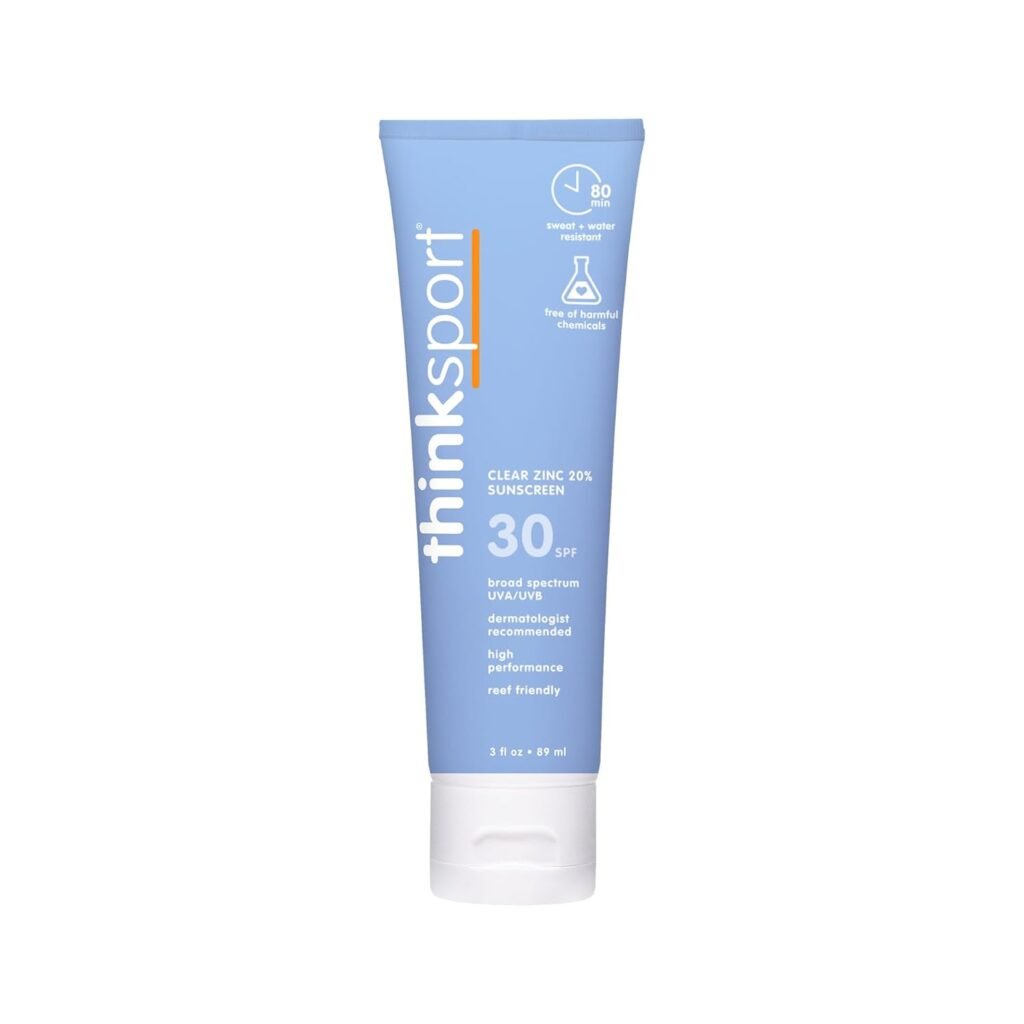
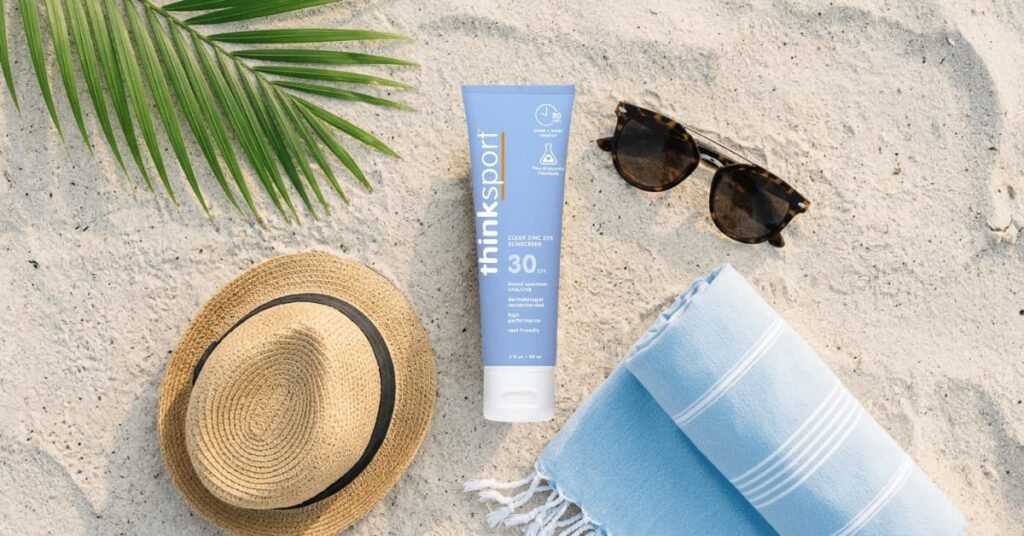
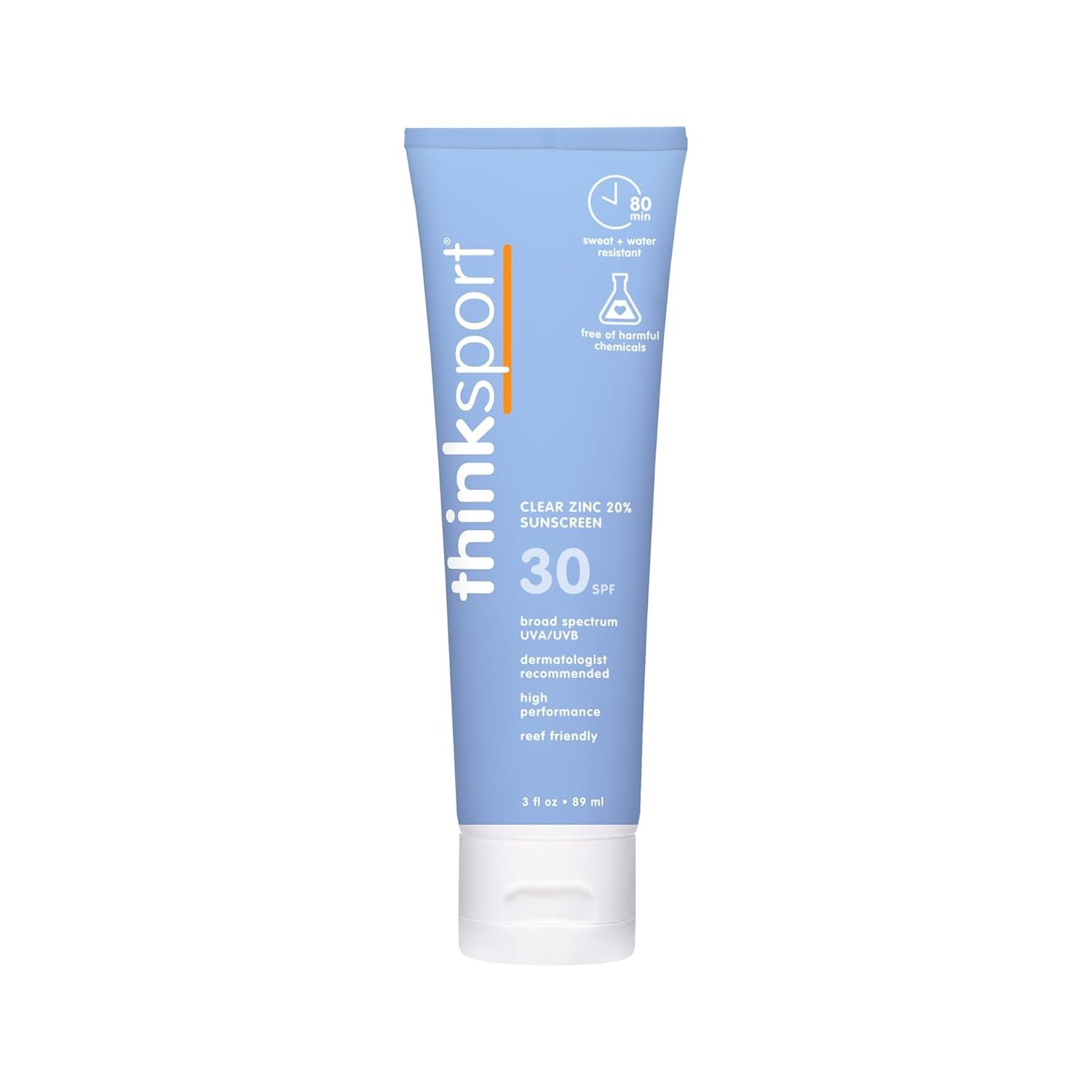
ThinkSport SPF 50+: Best Reef-Safe Sunscreen for Sensitive Skin Travelers
This is the sunscreen I recommend to friends who’ve had reactions to other reef-safe brands.
The Tested Reality: My travel companion has eczema and reacts to most sunscreens with redness and itching. However, she used ThinkSport for our entire Florida trip without a single flare-up.
The formula is completely unscented. Additionally, it doesn’t contain the essential oils that trigger her skin.
It also held up during our beach activities—we played paddleball for over an hour in full sun and she didn’t burn. Furthermore, it passed Hawaii’s strict reef-safe requirements when we checked the ingredient list. As a result, it’s safe for upcoming snorkeling trips.
This hypoallergenic formula is EWG-verified and provides complete broad spectrum protection.
What Makes It Work:
- Zero fragrance, no essential oils, and EWG-verified safe ingredients make this the cleanest formula in this comparison
Choose this if: You have sensitive skin, eczema, or allergies to common sunscreen ingredients like avobenzone or oxybenzone. Also great if you’re active and need clean protection that lasts.
➡️ Where to find it: ThinkSport SPF 50+ AVAILABLE ON AMAZON
The texture is slightly thicker than other options here. Consequently, it takes longer to blend. Budget an extra 30 seconds for application.
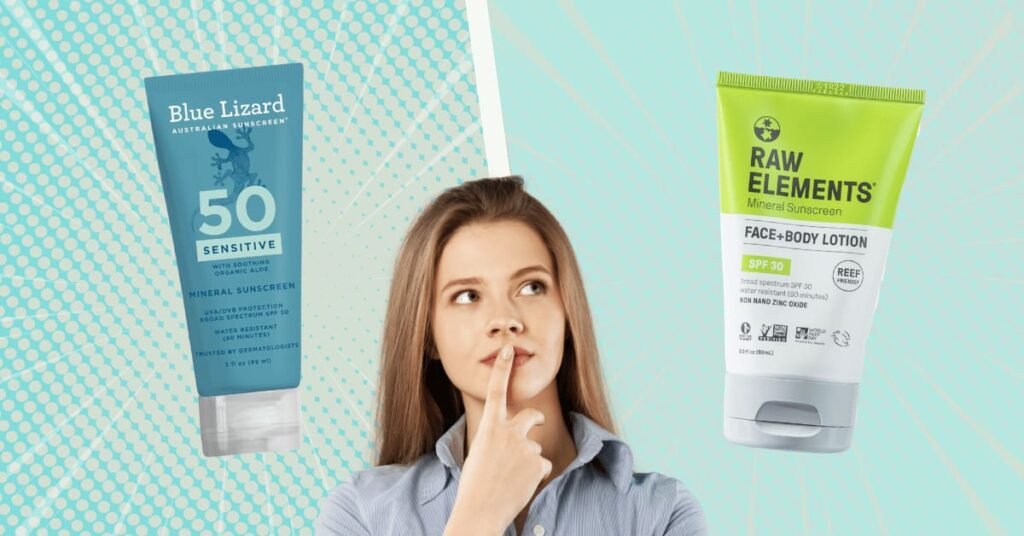
Blue Lizard vs Raw Elements: Which Should You Choose?
Raw Elements costs $6-8 more. However, it rubs in faster and leaves zero white cast.
In contrast, Blue Lizard sacrifices some absorption speed. Nevertheless, it performs nearly identically for sun protection and reef safety.
Both held up during active beach days. I wore Raw Elements during a beach volleyball tournament and Blue Lizard during a family spikeball game. As a result, neither let me down.
My take: If you’re traveling to Hawaii or the Caribbean more than twice per year, invest in Raw Elements. The faster application and invisible finish make morning beach prep less frustrating. This is especially true when you’re eager to get outside and enjoy the sun.
On the other hand, for 1-2 annual beach trips, Blue Lizard is the smarter choice. You’ll spend that extra $8 on a beachside drink instead.
Still Can't Decide? Use This 30-Second Test
Ask yourself these 3 questions:
- Budget: Under $15 or willing to spend $20+?
- Under $15: Go with Blue Lizard Sensitive Skin
- $20+: Choose Raw Elements Face + Body
- Skin Type: Sensitive or tolerates most products?
- Sensitive skin: ThinkSport is your safest bet
- Not sensitive: Any of the top 3 work well
- Activity Level: Lounging on beach or in/out of water?
- Mostly lounging: Sun Bum Mineral (easiest application)
- Active/swimming/beach sports: Badger Sport (best water resistance)
If decision fatigue is hitting, check out my guide on How to Stop Overpacking for my simplified choice framework that works for any travel decision.
What About Spray Sunscreen for Travel? Finding the Best Reef-Safe Sunscreen for Beach Travel
I tested spray sunscreen on a few beach trips. As a result, it created more problems than it solved.
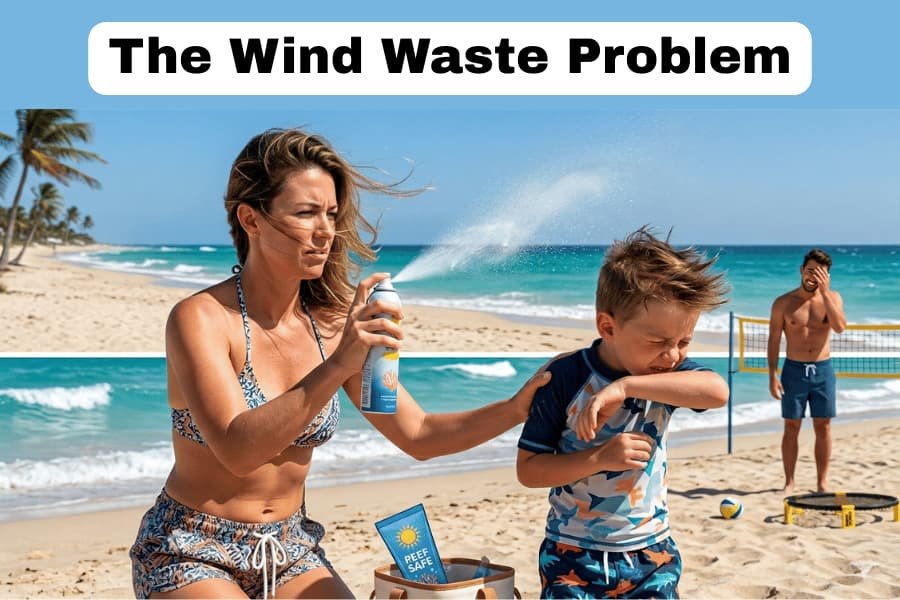
First, there’s the wind issue. I watched half a can of expensive spray sunscreen blow down the beach during a breezy afternoon in Florida. What should have lasted a week was gone in two days.
That’s money literally floating away on the ocean breeze.
TSA Sunscreen Rules Make It Difficult
Second, most spray bottles exceed TSA’s 3.4oz limit. The smallest aerosol cans I found were 6oz. Consequently, that means automatic checked bag. For carry-on-only travel, that’s a dealbreaker.
Understanding TSA sunscreen rules prevents checkpoint delays and helps you pack smarter.
Reef-Safe Options Don't Exist
Third, finding reef-safe spray options is nearly impossible. Most contain chemical filters like oxybenzone that are banned in Hawaii.
If you’re checking a bag and not visiting reef-protected areas, spray can work. However, for carry-on-only travel to Hawaii, Caribbean, or Mexico, stick with the lotion options above.
My take: I switched to lotion after realizing I could pack a 3oz tube that would last a full week. In contrast, a 6oz spray can would require checking a bag.
The application takes 60 seconds longer. Nevertheless, I save 20 minutes at baggage claim and don’t waste product to the wind.
Furthermore, when you’re active on the beach—diving for volleyballs, running after spikeballs—lotion stays exactly where you put it.
How I Pack Reef-Safe Sunscreen for Carry-On Travel
Getting sunscreen through TSA smoothly comes down to three habits I’ve developed after 15+ carry-on beach trips.
My TSA Security Routine
First, I keep my sunscreen in the same Best Travel Toiletry Containers for Carry-On Trips I use for all liquids. This means everything fits in the quart-size bag. As a result, it comes out in one motion at security. No digging, no repacking at the checkpoint while people wait behind me.
Second, I store the quart bag in the front pocket of my LOVEVOOK 40L backpack. Therefore, I can grab it without opening the main compartment. This keeps the security line moving and prevents the frustrated sighs from travelers behind me.
Third, I pack my reef-safe sunscreen alongside Proven Compression Packing Cubes to maximize space. The 3oz tubes fit perfectly in the mesh pocket of my toiletry cube. Consequently, I know exactly where it is when I arrive at the beach.
For a complete breakdown of what else goes in my beach carry-on, check out my Florida Beach Packing List where I detail every item that earned a spot in my bag.
Additionally, my Backpack vs Rolling Carry-On Guide explains why I avoid spray products for all my beach travel gear.
Why Reef-Safe Sunscreen Matters for Your Destination
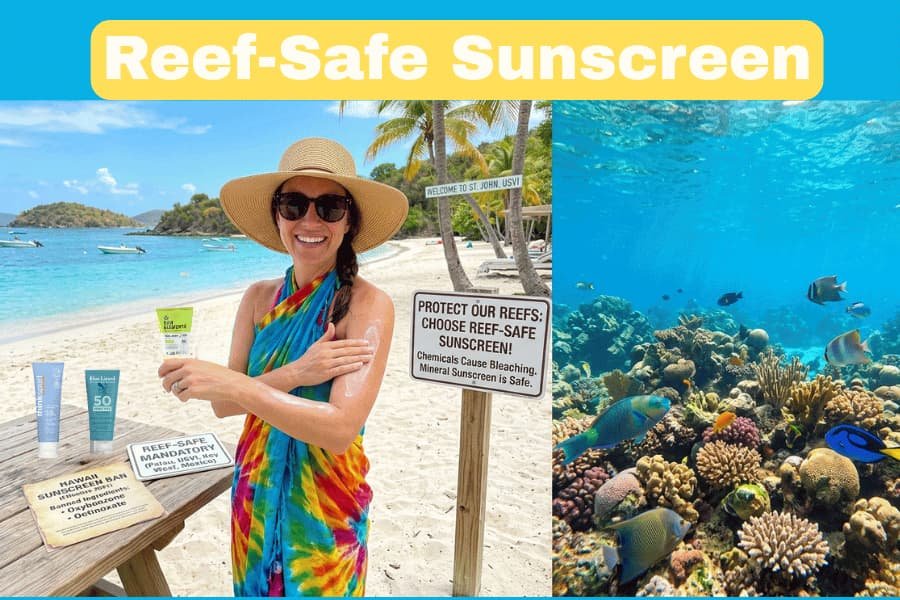
Legal Requirements in Popular Destinations
Hawaii banned the sale of sunscreens containing oxybenzone and octinoxate in 2021. If you show up with chemical sunscreen, you won’t find replacements in local shops. They legally cannot sell it.
The U.S. Virgin Islands, Key West, Palau, and parts of Mexico have similar bans. Consequently, reef-safe isn’t a preference anymore. It’s a legal requirement in the destinations most carry-on travelers visit.
This reef-safe sunscreen for Caribbean destinations is now mandatory in many islands.
Environmental Impact on Coral Reefs
Beyond regulations, chemical sunscreens cause coral bleaching at extremely low concentrations. Even tiny amounts cause damage. Specifically, concentrations as low as 62 parts per trillion harm reefs.
That’s the equivalent of one drop of water in six Olympic swimming pools. When you’re snorkeling or swimming—or even just playing beach volleyball near the shoreline—that sunscreen comes off. As a result, it directly impacts the reef you came to see.
I switched to mineral sunscreen two years ago and haven’t looked back. The white cast issue that plagued early zinc formulas has been solved by brands like Raw Elements and Sun Bum.
Therefore, there’s no reason to use chemical sunscreen for beach travel anymore.
The Best Reef-Safe Sunscreen Is the One You'll Reapply
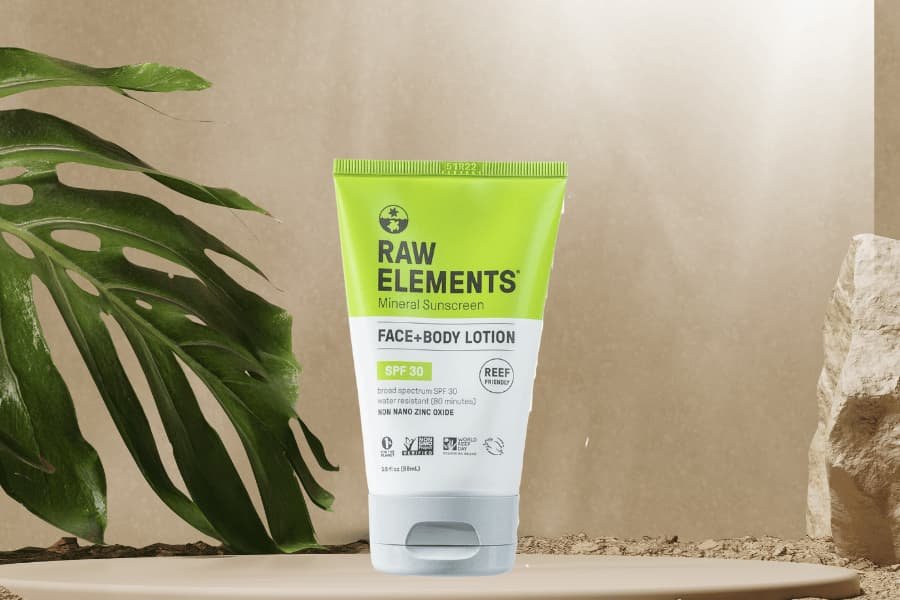
The best reef-safe sunscreen for beach travel is the one you’ll actually reapply every two hours. I keep Raw Elements in my beach bag because it works and I don’t think about it.
That’s the goal—gear that disappears into your trip. Consequently, you can focus on the water, the games, and soaking up the sun. Not the zinc oxide percentage or whether you’re going to end up burnt and miserable tomorrow.
I love spending full days on the beach. Beach volleyball tournaments, family paddleball matches, spikeball games that go on for hours—that’s what vacation means to me.
The right sunscreen means I can play hard and stay out all day. Furthermore, I wake up the next morning ready to do it again instead of hiding indoors because I’m too burnt to move.
Pick one from this list and add it to your cart. Then get back to planning which beach you’ll test it on first. If you’re heading to Florida soon, my New Smyrna Beach Girls Weekend Packing List shows exactly what I brought and what I wish I’d left home.
If you’re still mastering the art of packing light, my guide on How to Stop Overpacking walks through the three-system approach I use to cut my beach bag weight in half.