As an affiliate, I may earn a commission from qualifying purchases made through links in this post at no extra cost to you.
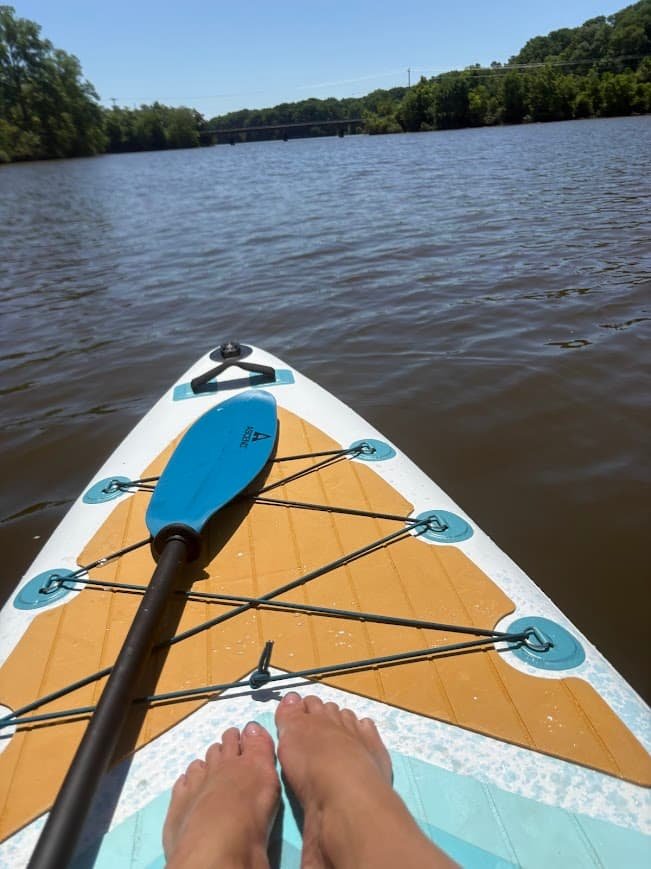
The moment I stepped onto the board for the very first time was absolutely terrifying. Even though I love being on the water, I had never tried stand-up paddling before. However, when a friend invited me out to Alum Creek, I decided to push through my fear and just say yes.
Fortunately, while I usually stick to land adventures like my favorite Mohican State Park hiking day trip, saying yes to this water adventure was the best decision I could have made. I packed my swimsuit and headed out, completely nervous about what was going to happen next.
If you are feeling anxious too, please do not worry. This guide to paddleboarding for beginners will take away all your fears. In fact, by the end of this post, you will know exactly what to expect on the lake. Additionally, you will learn what to wear, what gear to bring, and how to stay balanced so you do not embarrass yourself. Ultimately, you can do this, and you might just fall in love with it!
Preparing for the Water and Loading into the Lake- Paddleboarding For Beginniner

Before you can hit the water, you need to get your gear ready. If you use an inflatable board, you can fill it up with a hand pump or an electric pump. For our trip, we used an electric pump. First, make sure you have the machine set to inflate. Next, secure the nozzle tightly to the air valve and watch it fill up. Thankfully, the pump will stop automatically once the board is completely full.
After inflating the board, it is time to attach the tracking fin. The fin simply slides into a slot on the bottom and screws into place. In fact, it is a very easy system! When you are ready to carry the board, place the top side toward your body. Then, reach over the top to grab the carrying handle located on the bottom. Always be aware of the fin and protect it from dragging as you move toward the beach.
Step-by-Step Guide Paddleboarding for Beginners: Launching onto the Lake
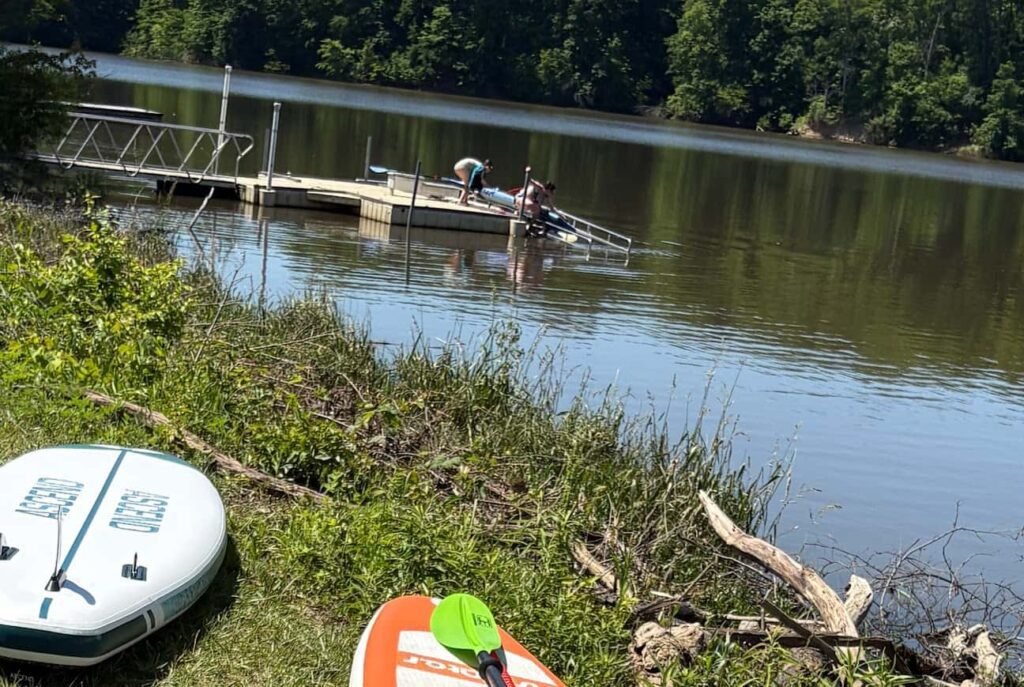
Floating Launch Platform Howard Raod Boat Ramp
Eventually, you will reach the water. We loaded our gear using a handy floating launch platform. First, place the fin end of the paddleboard into the deeper part of the launch pad. Second, secure any loose items into a waterproof bag and strap it to the board. After that, sit down and place your paddle diagonally across your lap. Finally, use the metal handrails to push yourself out into the open water. This makes the transition into the lake incredibly easy.
Launching Tip: Always keep three points of contact on your board when you are moving around to prevent tipping over!
Most importantly, remember that you can always just sit down. Honestly, I sat down the entire time during my first trip! As a result, I found the whole experience very enjoyable. Sitting down makes it easy to paddle and helps you feel totally secure. Therefore, you will not feel unbalanced, but you will still be able to maneuver exactly where you want to go. Just double-check that your tracking fin is secure on the bottom, and you are ready to explore!
Mastering the Basics: How to Launch, Stand, and Paddle
Preparation
- First, select a wide, stable board and a properly fitted life jacket.
- Next, adjust your paddle height so it stands roughly six inches above your head.
- Before heading out, check local weather conditions to avoid heavy winds or currents.
- Then, locate a calm, shallow launch area with flat water.
Launching
- Initially, walk your board out into knee-deep water so the fin clears the bottom.
- After that, climb onto the board into a kneeling position directly over the center carry handle.
- From this position, practice taking a few paddle strokes on each side to find your balance.
- Once you feel steady, prepare to transition to your feet.
Standing Up
- To begin standing, place your hands flat on the board in front of your knees.
- Subsequently, move your feet one at a time into the exact spots where your knees were resting.
- Slowly rise up, keeping your knees slightly bent to absorb the movement of the water.
- Furthermore, ensure your feet stay parallel and spaced about shoulder-width apart.
- Crucially, keep your eyes fixed straight ahead on the horizon rather than looking down.
Forward Motion
- Now, submerge the entire blade of your paddle into the water ahead of you.
- Pull the blade back along the side of the board, stopping when it reaches your feet.
- As a rule, keep your top hand on the T-grip and your bottom hand on the shaft.
- Keep your arms straight and twist your core to generate power instead of using just your arms.
- To switch sides, simply swap your hand positions on the paddle shaft.
- Regularly changing sides will keep your board traveling in a straight line.
Recovery and Safety
- If you lose your balance, try to fall away from the board into open water.
- After a fall, swim back and climb onto the board from the middle section.
- Ultimately, consistent practice will quickly build your confidence and muscle memory.
- In addition, remember to take short breaks to prevent fatigue.
- Finally, enjoy the unique view and peace that this sport offers
12 Paddleboarding Tips for Your First Time
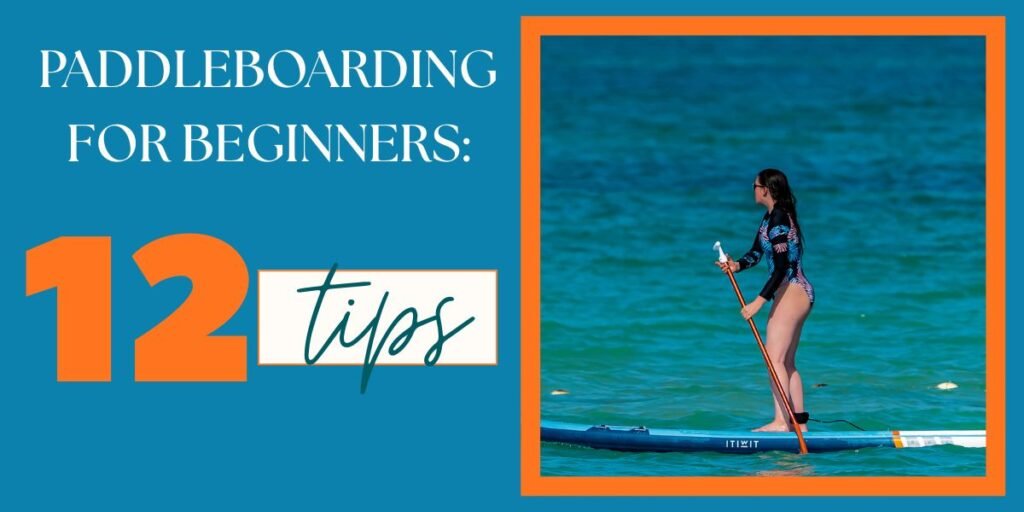
If you want your first trip to be an absolute success, following a few basic rules will make a massive difference. Fortunately, these simple strategies will take you from a nervous beginner to a confident paddler in no time. Here are twelve critical tips to keep you safe, stable, and smiling out on the lake:
Tip 1: Start on Your Knees, Not Your Feet
Trying to stand up immediately is the number one beginner mistake to avoid. Instead, you should spend your first few minutes kneeling to get a feel for how the board moves underneath you. In fact, I found sitting and kneeling to be incredibly enjoyable during my trip! Do not hesitate to sit for as long as you want because the main goal is simply to have fun.
Tip 2: Find Flatwater for Your First Session
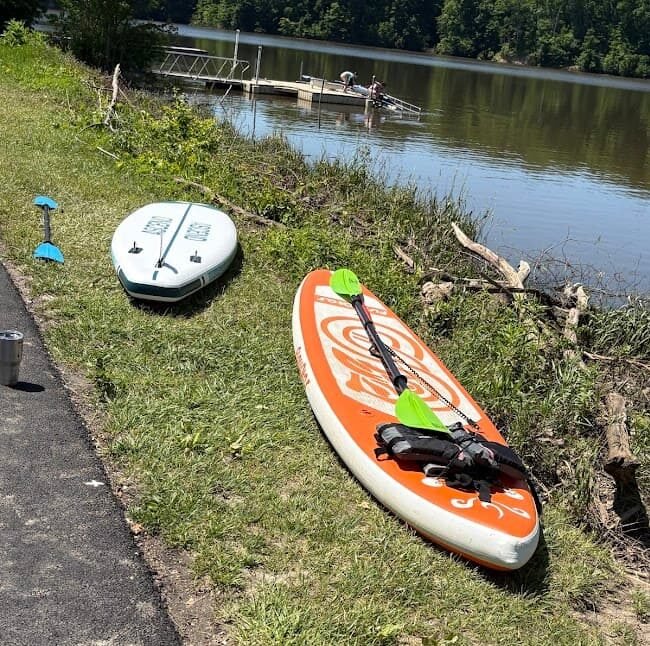
You definitely want to choose a quiet lake, a calm bay, or a protected cove rather than ocean surf. For example, I started out at Alum Creek in Delaware, Ohio, which provided a perfectly calm starting place. Next up, I am planning a trip to Lake Cumberland. This location will also have very calm water, but it features more boat wakes, so you must be ready for a little extra movement.
Tip 3: Look at the Horizon, Not the Water
Looking down at your feet is a natural instinct, but it is actually terrible for your balance. Therefore, you should always keep your eyes fixed straight ahead on the horizon. This counterintuitive trick is very important because it naturally keeps your body aligned, focused, and completely stable.
Tip 4: Bend Your Knees Slightly, Always
Locking your legs completely straight will almost always result in falling straight into the lake. In contrast, keeping soft, slightly bent knees acts like shock absorbers for small waves. This simple adjustment makes your paddling experience much smoother and makes balancing look completely effortless.
Tip 5: Keep Your Paddle Blade Angled Forward
Most beginners accidentally hold their paddle backward when they first get into the water. However, the scoop of the blade should always angle toward the front of your board. Holding it the right way helps your balance, keeps you in the correct position, and moves you forward with much less effort.
Tip 6: Use Your Core, Not Your Arms
If you pull the paddle using only your arm muscles, you will get exhausted within ten minutes. Instead, paddleboarding is a full-body movement that relies on your midsection. Twisting from your torso allows your strong core muscles to do the heavy lifting so your arms do not tire out.
Tip 7: Fall Away from the Board, Not Onto It
Please do not be afraid of falling because it is simply part of the learning process! Ultimately, every single paddleboarder falls into the water at some point. Just be prepared for it, and try to fall out into the open water away from your hard board so you do not bump your knees.
Tip 8: Rent a Board Before You Buy One
Paddleboards can be a massive financial investment. Therefore, it is smart to rent a few times before you spend your hard-earned money. Renting allows you to get the feel of different board sizes and styles, like wide all-around boards, to discover exactly what you prefer.
Tip 9: Go Out in the Early Morning
The early morning hours naturally provide the flattest water, the lowest winds, and the smallest crowds. Additionally, launching early will provide a much quieter entry into the water. This makes it much easier to spot local wildlife resting along the shoreline.
Tip 10: Wear Your Safety Leash
You should never launch onto the lake without attaching your safety ankle leash. Basically, this cord keeps you connected to your board at all times. If you happen to fall off in a sudden gust of wind, the leash prevents your board from quickly floating away out of reach.
Tip 11: Apply Sunscreen Before You Get on the Water
Water reflects the sun’s rays fiercely, and you cannot easily reapply a messy lotion while balancing mid-session. Consequently, you need to apply a high-quality sunscreen before leaving the shore. If you are packing light for an upcoming flight, check out my guide on the Best Reef-Safe Sunscreen for Beach Travel: 5 TSA-Approved Lotions to keep your skin and the environment safe.
Tip 12: Give Yourself 20 Minutes Before You Judge
The first ten minutes are usually a little rough and shaky for everyone. Thankfully, something magic happens around the twenty-minute mark where your muscle memory suddenly clicks. Be patient with yourself, and give your body a little adjustment time before you judge this amazing new adventure!
Is Paddleboarding Hard for Beginners?
The honest answer is that the first ten minutes are absolutely the hardest part of the entire experience. However, once you actually stand up and get past those first few shaky moments, you can finally relax and enjoy the ride. Surprisingly, your natural balance clicks in much faster than you would ever expect.
Relax, Explore, and Enjoy the Water
Paddleboarding is a great way to get outside and enjoy the water. Many people of varying ages and fitness levels find it accessible and enjoyable. If you start to feel tired, you can sit or kneel on your board and take a break while enjoying the scenery and watching local wildlife.
Safety note: Always wear a properly fitted life jacket, check weather and water conditions before heading out, and stay within your comfort and skill level.
Most Paddleboarding Beginners Stand Confidently Within a Few Minutes
Most people are standing confidently within fifteen to twenty minutes. In fact, it took me about ten minutes to feel totally comfortable standing up, and then I just went back and forth between standing and sitting. You can absolutely do this! It is so rewarding once you get past that initial fear.
Falling in is Part of Paddleboarding for Beginners
Of course, you might fall into the water a few times while you are learning. Therefore, you should definitely protect your gear by slipping your phone into a smartlle Waterproof Phone Pouch. Finally, make sure to keep a towel from my Best Quick Dry Travel Beach Towel guide waiting in your car so you can use it when you get back on shore for a quick dry!
What to Wear Paddleboarding as a Beginner
Finding the right gear can be very helpful when you are first starting out. For example, I wore my favorite swimsuit with a skirt on my first trip because I was looking forward to getting some sun. However, you must protect your skin from the intense water reflection. Therefore, I was sure to apply my favorite e.l.f. SKIN Suntouchable! Whoa Glow SPF 30 before hitting the lake.
Paddleboarding for Beginners Simple Gear Guide
- Swimsuit or Rashguard: Wear a swimsuit as your base layer because you will likely get wet. Additionally, you can wear a lightweight rashguard if you want extra sun protection WOWENY Women Rash Guard Long photo link:
- Sun Hat: A wide-brim straw hat is excellent for keeping the glare out of your eyes. Womens Beach Sun Straw Hat, Wide Brim Sun Hat
- Footwear: Wear water shoes for launching, but go barefoot on the board. In contrast, heavy flip-flops will just slide around. Instead, save your comfortable walking shoes from my guide on the Best Sandals for Travel for your post-paddle dinner on shore..
SUNSCREEN IS KEY: Most importantly, remember to protect the environment while you protect your skin. If you are paddling in the ocean or a sensitive eco-system, you need to use a mineral-based formula. Fortunately, you can check out my top tested recommendations in my guide to the Best Reef-Safe Sunscreens to find the perfect match for your next sunny trip!


What to Bring Paddleboarding (Beginner Gear List)
Be sure you are ready for your day on the lake by planning out your gear ahead of time. Fortunately, choosing the right items will help make paddleboarding for beginners a massive success. Therefore, you should focus on gear that is lightweight, waterproof, and easy to secure. Here are the top tested items you need to pack for a perfect day:
- Face Sunscreen: The best way to protect your face from intense water reflection is the e.l.f. SKIN Suntouchable! Whoa Glow SPF 30.
- In fact, it keeps your skin safe while adding a gorgeous, healthy glow.
- Waterproof Phone Case: You will definitely want to take photos, so use a smartlle Waterproof Phone Pouch. It keeps your phone easy to reach and perfectly safe if it gets wet.
- Insulated Water Bottle: Staying hydrated is very important. For example, the Owala FreeSip Insulated Stainless Steel Water Bottle is the best choice for keeping your water ice-cold all day long. Additionally, it is incredibly easy to clip directly to your board straps.
- Small Dry Bag: You need a safe spot for your keys, extra snacks, and dry clothes. My personal choice is the HEETA Waterproof Dry Bag because it keeps everything perfectly dry.
After testing several beach bags on a recent trip, my first choice for a beach day is always my favorite Best Beach Bag for Carry-On Travel option. However, it definitely does not belong on a paddleboard where your gear is bound to get soaked!
What to Leave in the Car
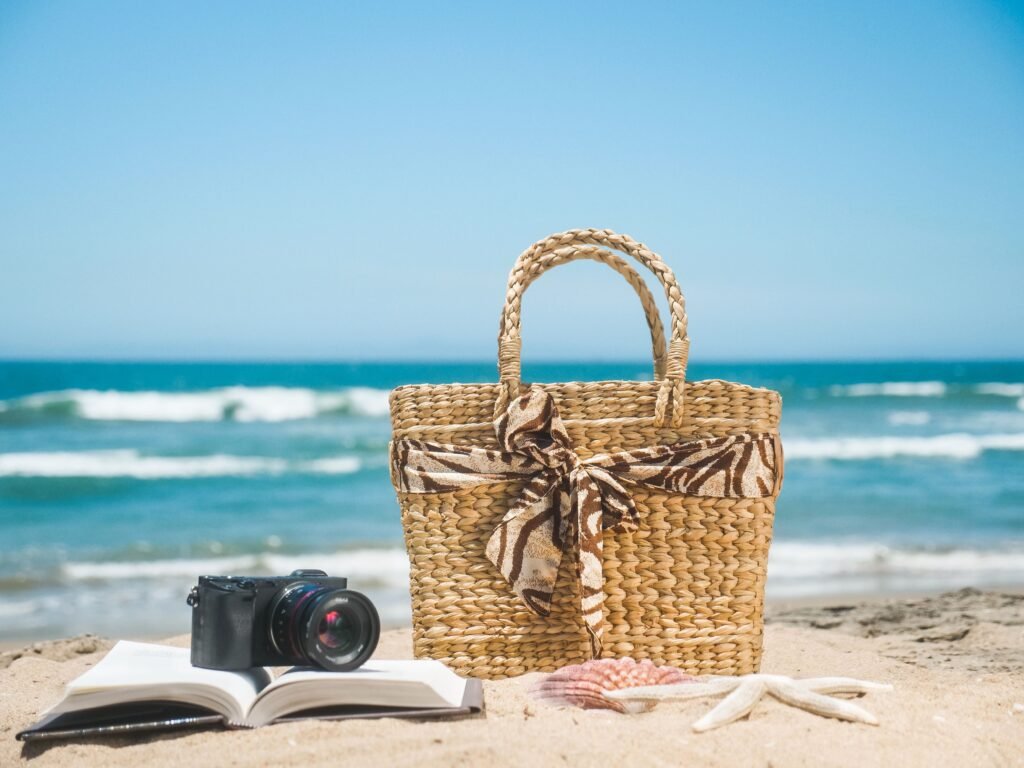
In contrast to what you bring onto the water, you also need to know what to leave behind. You should always leave your regular beach bag, expensive valuables, and anything that absolutely cannot get wet locked safely inside your vehicle.
Ultimately, paddle boarding is a time to leave the heavy gear behind and save it for your next actual beach stop. After testing several beach bags on a recent trip, my first choice for a beach day is always the Best Beach Bag for Carry-On Travel. However, it definitely does not belong on a paddleboard where your gear is bound to get soaked!

Should You Take a Paddleboarding Lesson?
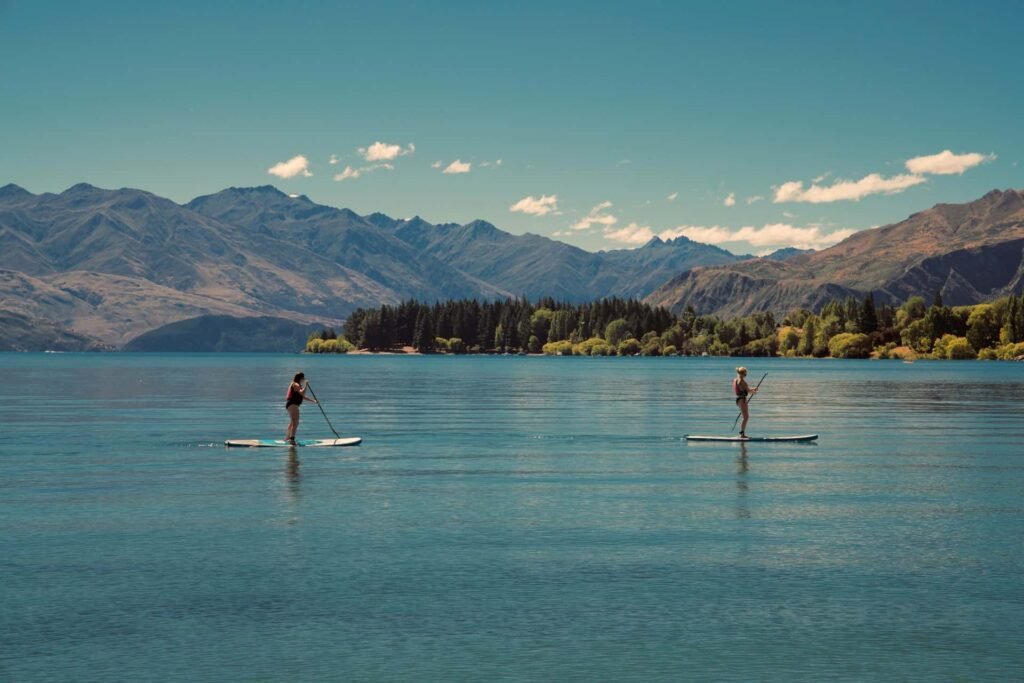
If you are planning your first adventure, you might be wondering if you actually need a formal lesson. Ultimately, it completely depends on where you plan to go.
If you are launching into calm, flat water like a quiet lake, a paid lesson probably isn’t necessary. Fortunately, paddleboarding is pretty easy to learn on your own. In fact, many rental shops will give you a free, quick 10-minute overview on the sand. This makes paddleboarding for beginners much less intimidating because they will show you exactly how to stand up and hold your paddle before you hit the water.
However, if you are heading into the ocean or anywhere with a strong current, a lesson is absolutely worth it. Moving water and ocean waves change the game entirely. Therefore, you need to know how to handle changing conditions. Additionally, always make sure to ask the rental shop about the wind and tides and wear your life vest before you grab your board so you can stay safe out there!
FAQ SECTION For Paddleboarding for Beginners
Can I paddleboard if I can't swim?
Technically yes with a life jacket, but knowing how to swim is strongly recommended
How long does it take to learn paddleboarding?
Most beginners are comfortable standing within 20-30 minutes
What size paddleboard is best for beginners?
Wider, longer boards (10-11 feet) are most stable — ask your rental shop
Is paddleboarding good exercise?
Yes — core, arms, legs, and balance all get a workout
Can you paddleboard on a lake?
Absolutely — lakes are ideal for beginners due to flat, calm water
Conclusion Paddleboarding for Beginners: You Can Do It!
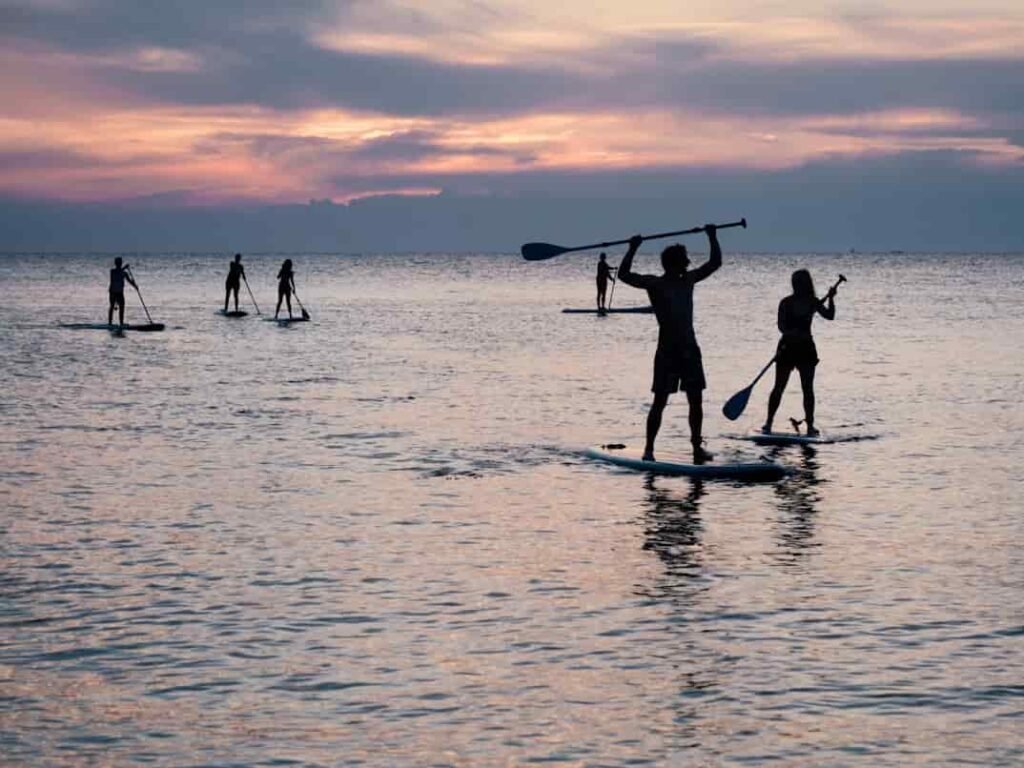
Photo by Krzysztof Kowalik on Unsplash
Ultimately, looking back at my first terrifying day at Alum Creek, I am so glad I pushed through my fear and said yes. Even though I was completely shaking at first, sitting down on the board helped me feel secure and completely in control. Fortunately, you do not have to be a perfect athlete to enjoy the water. In fact, everyone starts exactly where you are today.
Therefore, do not let a little bit of nervousness stop you from trying paddleboarding for beginners. Instead, grab your sunscreen, protect your phone in a waterproof pouch, and just head out there! Once you get past those first ten minutes, it is incredibly rewarding.
Where are you planning to go for your very first paddleboard adventure? Additionally, if you are currently planning a big beach trip, make sure to grab my Free Packable beach Gear Checklist below so you don’t leave the essentials behind!